Compare the surface, artwork structure and movement.
Use the table to identify the closest production route, then review the dedicated product page before submitting the specification.
| Process | Surface | Color treatment | Metal relief | Fine detail | Gradients / printed artwork | Moving parts | Best suited artwork | Main limitation | Product page |
|---|---|---|---|---|---|---|---|---|---|
| Hard Enamel | Smooth, polished and level | Enamel fills metal-bordered color cells | Face is polished level rather than visibly recessed | Detail must work with continuous metal borders at finished size | Not intended for continuous printed gradients | No | Clean logos, defined color blocks and a level presentation | Artwork must divide into practical enamel cells | Hard Enamel Pins |
| Soft Enamel | Recessed enamel with tactile raised metal | Color remains below the metal borders | Raised linework stays visible above the enamel | Fine areas still need metal separation and finished-size review | Not intended for continuous printed gradients | No | Bold outlines, separated colors and visible metal texture | Does not produce a completely smooth, level face | Soft Enamel Pins |
| 3D Die Cast | Sculpted, rounded or multi-level metal | Visible metal is primary; enamel can be reviewed in selected areas | Raised and recessed relief forms the pin body | Detail depends on the approved relief and depth references | Not selected to reproduce a full printed image | No | Faces, objects, dimensional logos and sculpted forms | Relief requires a clear molding review, not only flat color artwork | 3D Die Cast Pins |
| Offset Printed | Printed artwork on a prepared metal surface | Approved artwork is printed rather than divided into enamel cells | Metal can remain visible at the border; the image itself is not relief | Supports fine printed detail, subject to legibility review at finished size | Suitable for gradients and continuous color transitions | No | Detailed illustrations, small visual elements and complex color changes | Does not create the raised or recessed color-cell character of enamel | Offset Printed Pins |
| Spinner | Fixed base plus a separate rotating component | Hard or soft enamel can be reviewed for each component | Depends on the selected component construction | Each component is checked at finished size | Not inherent to the spinner structure; component surfaces are reviewed separately | Yes — pivoted rotation | Wheels, pointers, selectors and artwork built around movement | Pivot, clearance, overlap and backing position must work together | Spinner Enamel Pins |
Hard Enamel vs Soft Enamel
Hard enamel is filled and polished until the enamel and metal borders form a smooth, level face. It is suited to clean color blocks and artwork that can be separated by continuous metal lines.
Soft enamel keeps the filled color below raised metal borders. The recessed areas and exposed linework give the finished pin visible depth and tactile texture.
This is only the surface-level distinction needed for a five-process comparison. The dedicated Hard vs Soft Enamel Pins guide keeps the two-process decision separate from this broader page.
Printed artwork compared with enamel color cells
Offset printed pins place the approved image on a prepared metal surface. The artwork does not need a raised or recessed metal divider between every color, so gradients, continuous transitions and detailed printed elements can remain part of the layout.
Hard and soft enamel instead organize color into separate cells bounded by metal. Hard enamel finishes those cells level with the borders; soft enamel keeps them recessed. That physical structure gives enamel its characteristic surface but also changes how fine artwork and color transitions must be prepared.
Offset printing is the specific route described here. It is not used as a general label for UV printing, screen printing or every method sold as a printed pin.
3D die cast relief compared with flatter enamel structures
3D die cast pins build raised, recessed, rounded and multi-level form into the metal body. They suit artwork where the shape of a face, object, emblem or dimensional logo matters more than dividing a flat face into color cells.
Hard and soft enamel pins use a flatter, metal-bordered color structure. They can show visible metal lines and some height difference, but they do not create the same sculpted transitions as an approved 3D relief mold.
Neither route is an automatic upgrade over the other. The choice follows whether the artwork depends on physical relief or on enamel color placement.
Spinner pins compared with fixed pin structures
A regular hard enamel, soft enamel, printed or 3D pin is reviewed as a fixed body. A spinner pin adds a separate rotating component over a fixed base and secures it around an approved pivot or rivet.
The moving path changes the design review. Component overlap, rotation clearance, backing position and the relationship between the base and rotating artwork must be confirmed as one assembly.
Choose a spinner only when movement carries useful information or interaction in the design. Artwork that does not depend on rotation can remain a fixed pin structure.
Start with the effect the artwork actually needs.
- Clean color blocks: review hard enamel when the design should have a smooth, level face.
- Raised metal texture: review soft enamel when recessed color and tactile linework are part of the design.
- Gradients or fine printed detail: review offset printing when the image cannot be divided into practical enamel cells.
- Sculpted relief: review 3D die casting when rounded form and multiple height levels define the artwork.
- Moving interaction: review a spinner structure when a rotating component is essential to the design.
Confirm the process at the intended finished size.
Artwork review checks more than the source file at screen scale. The proposed finished size determines how much room remains for metal borders, narrow color areas, small text, relief transitions, printed detail and separate moving components.
Identify the line detail that must remain visible, whether colors need metal separation, where depth is required and whether any component moves. Those decisions allow the digital proof to record the selected process, shape, surface, backing and other approved details.
The Artwork Guide lists the files and specification information to send for review.
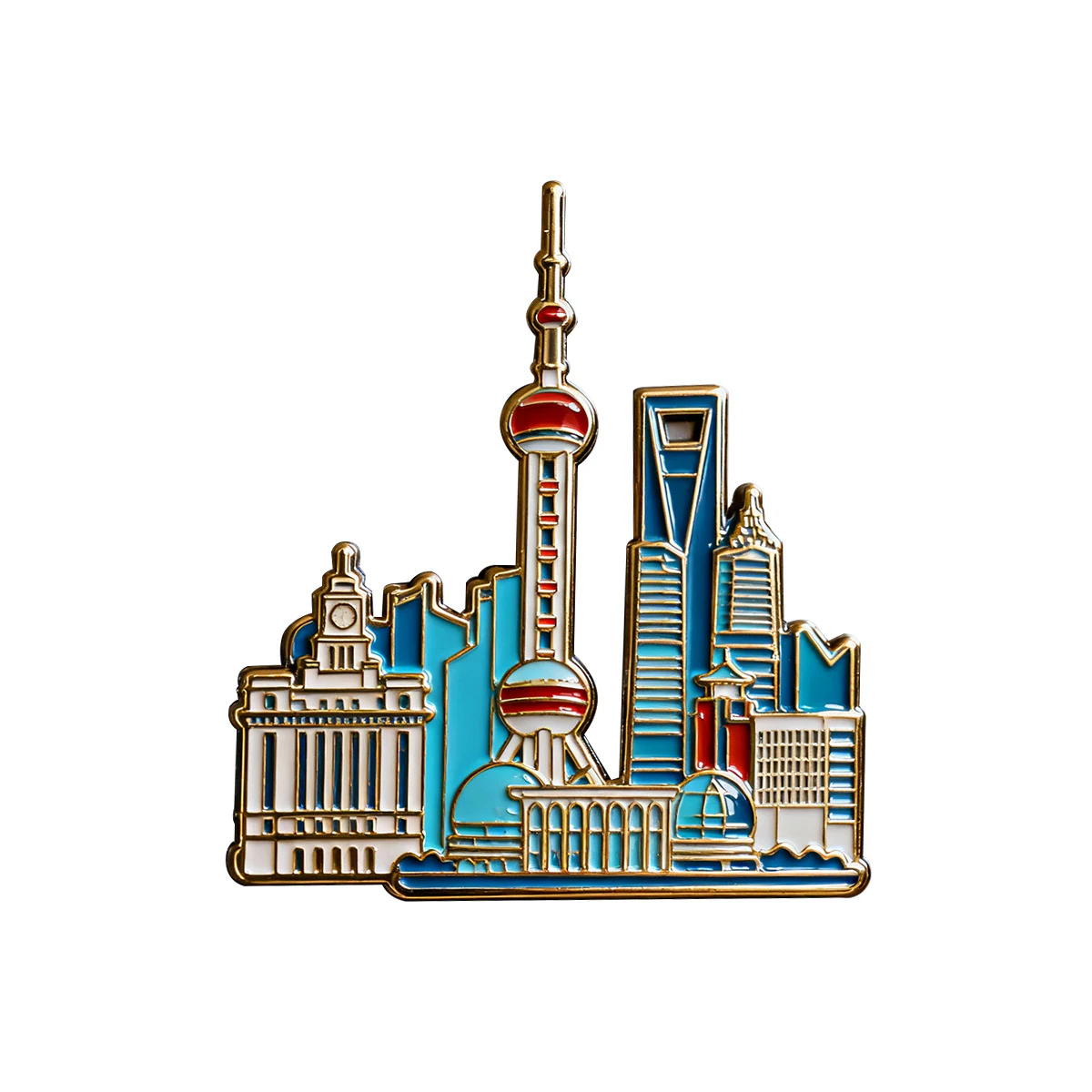
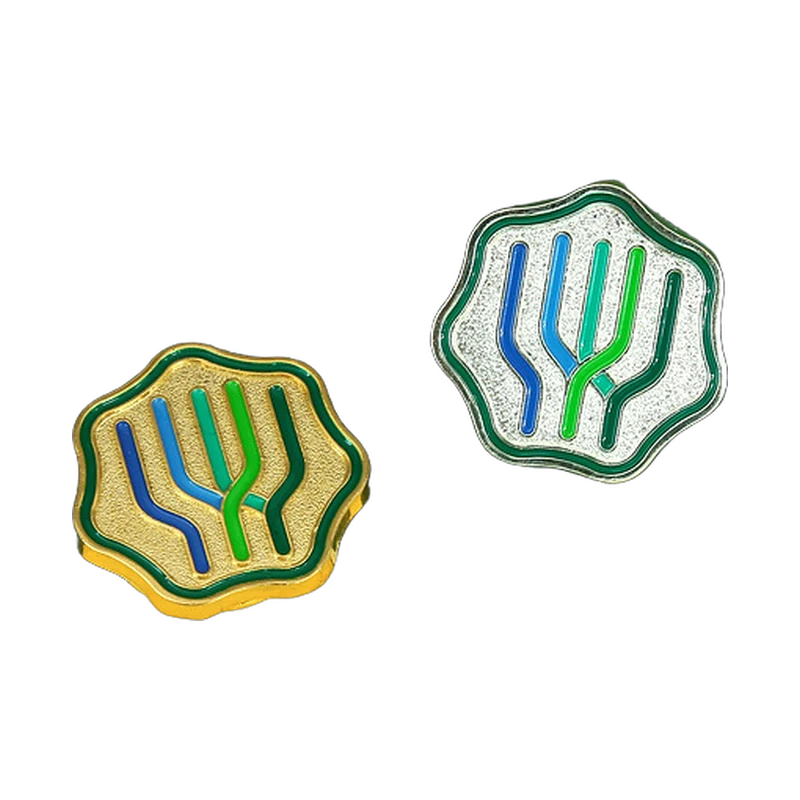
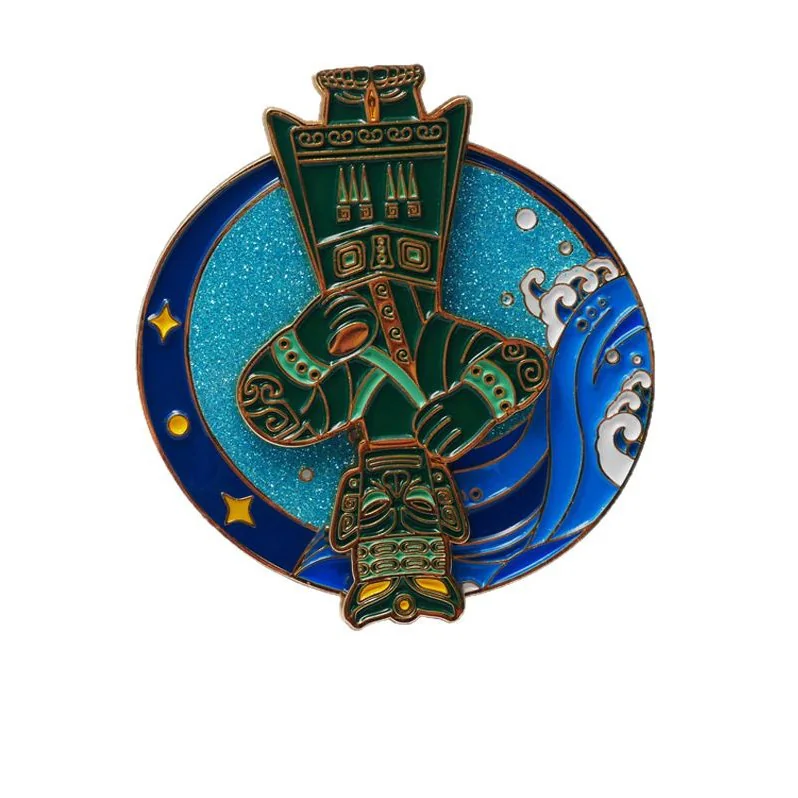
Approved product samples from the compared processes.
These images show current real product references. They illustrate process structure and are not presented as customer case studies.


Questions to resolve before selecting a process
Which pin process gives a smooth, level surface?
Hard enamel is filled and polished so the enamel and surrounding metal borders finish at the same level. It suits artwork built from clean, separated color blocks.
Which process keeps raised metal lines and recessed color?
Soft enamel leaves the filled color areas below the raised metal borders. The height difference creates visible depth and a tactile surface.
Which process is suitable for gradients or continuous color transitions?
Offset printed pins can reproduce approved gradients, fine printed detail and continuous color changes on a prepared metal surface. This page does not treat offset printing as the same process as UV printing or screen printing.
Are 3D die cast pins better than enamel pins?
Neither process is universally better. A 3D die cast structure suits sculpted relief and multiple height levels, while hard or soft enamel suits artwork organized into metal-separated color areas.
Can spinner pins use hard or soft enamel?
Hard or soft enamel can be reviewed for the fixed base and rotating component. The selected surface must still work with the pivot, component overlap, moving clearance and backing layout.
Can the production process be chosen from the artwork alone?
The source artwork is the starting point, but the review also needs the intended finished size, important line detail, color separation, required depth and any moving structure before a process is confirmed.
What should I send for a process review?
Send JPG, PNG, PDF, SVG, AI or EPS artwork, up to 10 MB, with the intended finished size, quantity, required surface or interaction, backing preference, packaging requirement, delivery destination and required delivery date.